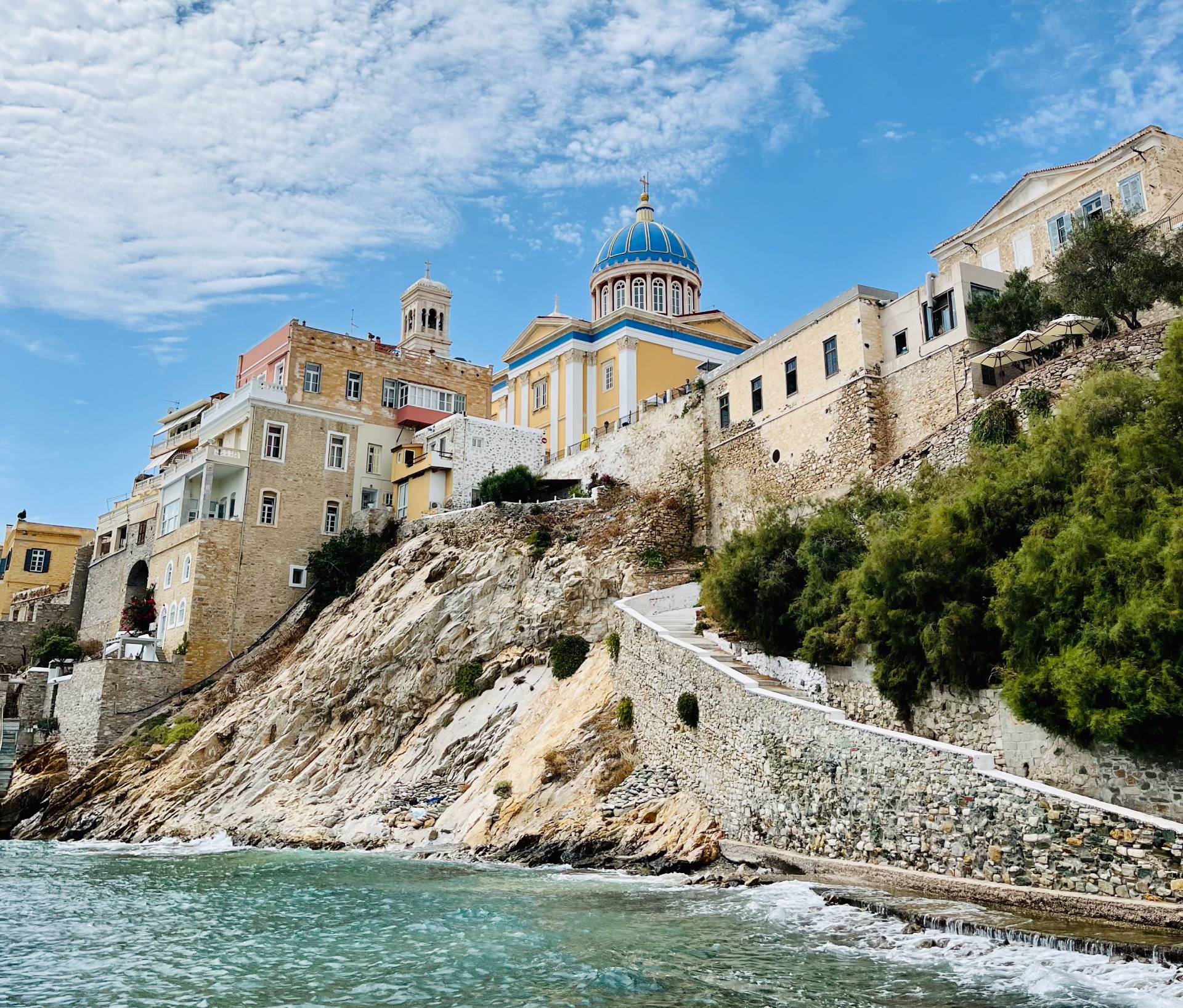
THE UNIQUE GEOLOGY OF SYROS
Syros, as well as the entire Cyclades island complex, was the bottom of a shallow sea millions of years ago. The convergence of the African plate with the Eurasian plate caused the rise of the seabed rocks.
The island's current form was formed after a long process of metamorphism. In 1845, the German geologist Hausmann discovered on Syros a mineral with a striking blue color that he called glaucophane (from glaucophane + phaineste). The rocks containing this mineral (glaucophane) were called blueschists.
Along with the blueschists there are also some other rocks with minerals in deep red and emerald green colors that were called eclogites. Both the blueschists and the eclogites were created at a depth of more than 20 km below the surface of the earth under conditions of very high pressures. What makes Syros unique in the world, in terms of geological interest, is the possibility of seeing and observing these rocks on the surface of the ground, such as for example the Aerolithos in Apano Meria.
The island as a whole is a geological museum. Universities from all over the world organize geological field visits to Syros every year and the findings of the research carried out are published in reputable scientific publications worldwide. Syros is part of the world geological heritage, which we should protect and promote.
If you want to visit Aerolithos, the motorbike you rent from us will take you quite close, but you will need to walk on a path for about half an hour and you will definitely need to bring water and sun protection with you.